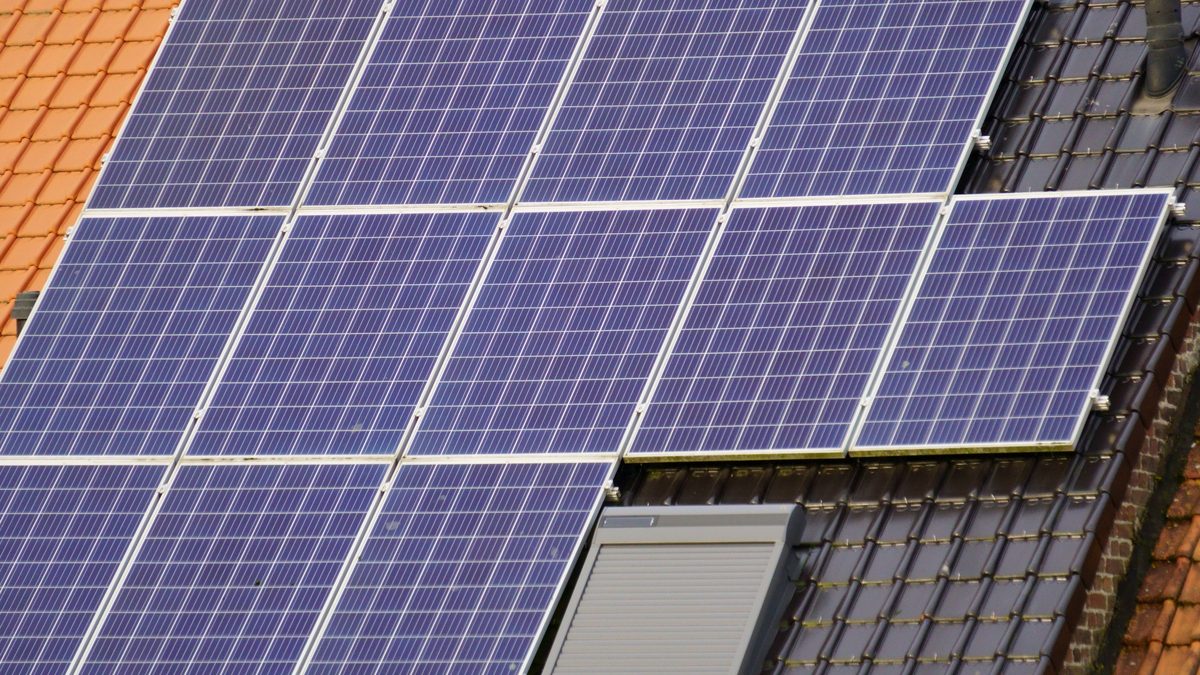
🔧 System at a glance
This is a mid-size grid-tied system suited to a typical family home. It uses eight high-power panels and a 5kW inverter. A battery is optional and shown separately.
| Component | Specification |
|---|---|
| Solar panels | 8 × 625 W Jinko monocrystalline = 5,000 Wp (5.0 kWp) |
| Inverter | 5 kW grid-tied string inverter (ABB / FIMER in this example) |
| Mounting | Roof rails, south-facing, fixed tilt (~30° in this example) |
| Cabling & protection | DC & AC cable, DC isolator, breakers, surge protection, earthing |
| Battery (optional) | ~10 kWh lithium (LiFePO4) for partial backup |
Size your own array with the panel calculator and match the inverter with the inverter calculator.
☀️ Estimated production
Using about 5.5 peak sun hours (a sunny climate) and a realistic performance ratio of ~0.8 for losses (heat, wiring, inverter), a 5.0 kWp array gives roughly:
| Period | Approx. production |
|---|---|
| Per day | ~22 kWh |
| Per month | ~660 kWh |
| Per year | ~8,000 kWh |
Production is higher in summer and lower in winter. Check your own output with the energy production calculator, and find your local sun hours in peak sun hours by location.
💰 Cost breakdown (Jordan, approximate)
Grid-tied, no battery — rough planning figures for Jordan (prices move, always get local quotes):
| Item | Approx. cost (JD) |
|---|---|
| 8 × 625 W panels | ~800 – 1,200 |
| 5 kW inverter (ABB / FIMER class) | ~600 – 1,000 |
| Mounting, cable, protection | ~450 – 700 |
| Installation & wiring | ~500 – 800 |
| Total (grid-tied) | ~2,500 – 3,800 |
| Optional 10 kWh battery | + ~1,400 – 2,600 |
📈 Savings & payback
In the real example above, a family home in Irbid had its electricity bill fully covered after installing this system. A 5 kW array producing ~660 kWh a month offsets a large family bill; depending on your tariff block that is roughly 80–160 JD per month saved, so a ~2,800–3,300 JD grid-tied system typically pays back in about 2–4 years — after which the power is essentially free for the panels' 25+ year life.
Run your own numbers with the ROI calculator and the bill savings calculator, or design the whole system at once in the system report builder.
🛠️ Field note
We once installed roughly a 5kW system for a home in Irbid, Jordan: 8 Jinko panels with an ABB inverter, mounted at a 30° tilt. It covered the household's electricity bill completely. On a well-oriented roof in this climate a 5kW system comfortably carries a typical family's consumption.
🧰 Design your own system
- Solar panel calculator — how many panels for your usage.
- Inverter calculator — match the inverter to the array.
- Battery calculator — size backup storage.
- ROI calculator — payback in your currency.
- Full system report — design the whole system in one page.
Comparing sizes? See the guides on how many panels to run a house and grid-tied vs off-grid vs hybrid. For your country's tariffs and payback, visit Solar by Country.
❓ Frequently asked questions
How many panels are in a 5kW solar system?
Usually 8 to 10 panels. This example uses 8 × 625W Jinko panels for about 5.0 kWp.
How much power does a 5kW solar system produce per day?
Around 22 kWh/day at ~5.5 peak sun hours for a 5.0 kWp array, so about 660 kWh/month and ~8,000 kWh/year.
How much does a 5kW solar system cost?
Roughly 2,500-3,800 JD grid-tied in Jordan, more with a battery. Get local quotes.
Is a 5kW solar system worth it?
For a typical family home, yes — with net metering it can pay back in roughly 2-5 years and then produce for 25+ years.
Note: all figures are approximate and for planning only. Production depends on your sun hours, shading and roof orientation; prices and tariffs vary and change over time. Always confirm with local installers and your electricity provider.